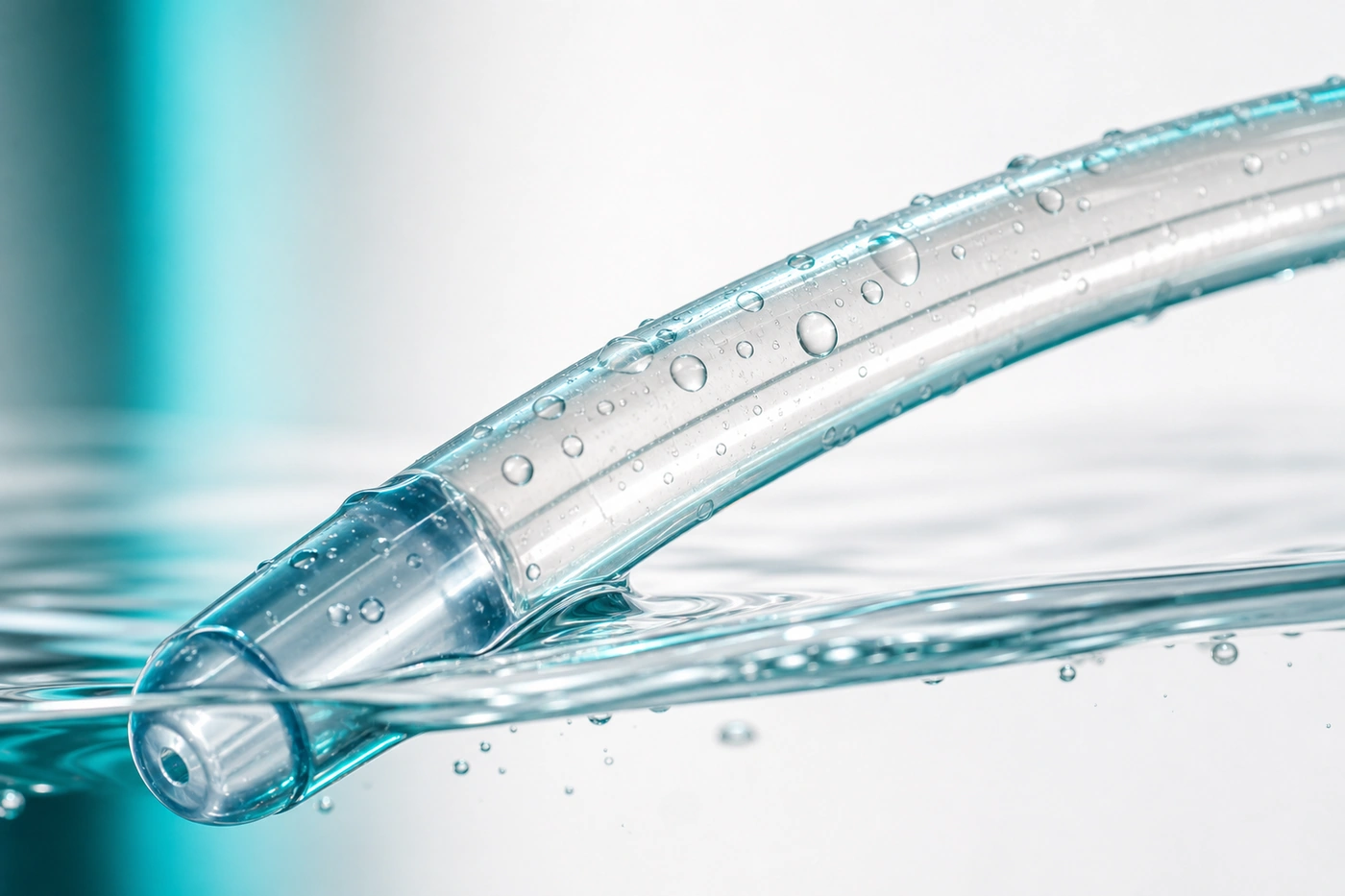
MediShield™ Hydrophilic Lubricious Coating

High-performance wet lubricity for catheters, guidewires, and interventional devices. CoF below 0.1 in aqueous environments. ISO 10993 tested. 100% PFAS-free.

CoF < 0.1 (wet) ISO 10993 Tested PFAS-Free Covalently Bound Inner Lumen Capable EtO Compatible
What is hydrophilic lubricious coating?

A hydrophilic lubricious coating is a surface treatment applied to medical devices that activates with water to form a slippery, low-friction layer. When hydrated, the coating creates a polymer hydrogel at the device surface that dramatically reduces the coefficient of friction — typically to below 0.1 — making the device easier to navigate through the body with less resistance and reduced trauma to surrounding tissue. Hydrophilic lubricious coatings are used on catheters, guidewires, stent delivery systems, endoscopy devices, and intraocular lens cartridges. The best-performing formulations are covalently bonded to the substrate (not physically adhered) and are validated to ISO 10993 biocompatibility standards.

Overview

How hydrophilic lubricious coating works

MediShield™ Hydrophilic Lubricious Coating is engineered to provide high-performance lubricity for medical devices, enabling them to glide smoothly over tissues or other device surfaces in wet or aqueous environments. The coating reduces friction, enhances maneuverability, and supports safer, more efficient clinical procedures.

Applied using Medical Surface's proprietary coating process, the coating forms a covalently-bound, pinhole-free polymer hydrogel layer on the device surface. When hydrated, this layer reduces the coefficient of friction to well below 0.1, enabling catheters and guidewires to navigate complex vasculature with significantly less resistance and tissue trauma.

Benefits

Biocompatible: Tested according to ISO 10993 standards
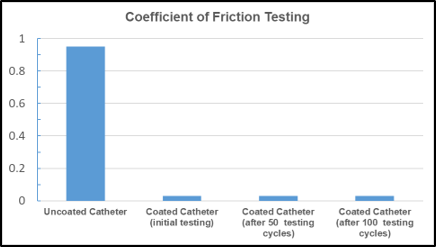
Exceptional Wet Lubricity: Coefficient of friction << 0.1
Strong Adhesion: Durable bonding to a wide range of substrates, including silicone and polypropylene
Internal Surface Coating: Capable of uniformly coating the inner surfaces of tubes
Excellent Durability: Maintains lubricity performance through repeated testing

Application examples

Catheters and guidewires
Endoscopy over-tube systems
Stent delivery systems
Feeding tubes
Intraocular lens (IOL) cartridges
MediShield Hydrophilic Lubricious Coating
Coefficient of friction testing data

Coefficient of friction testing — MediShield™ Hydrophilic Lubricious Coating vs. uncoated control

Application Highlight

Intraocular Lens (IOL) Cartridge Coating

One demanding application for MediShield™ Hydrophilic Lubricious Coating is the inner surface of IOL injection cartridges. The coating enables the IOL to be injected smoothly through the narrow cartridge with minimal force, reducing the risk of lens damage and improving surgical outcomes.

Our coating process achieves uniform coverage inside the cartridge lumen — a geometry that cannot be consistently coated by conventional coating methods.
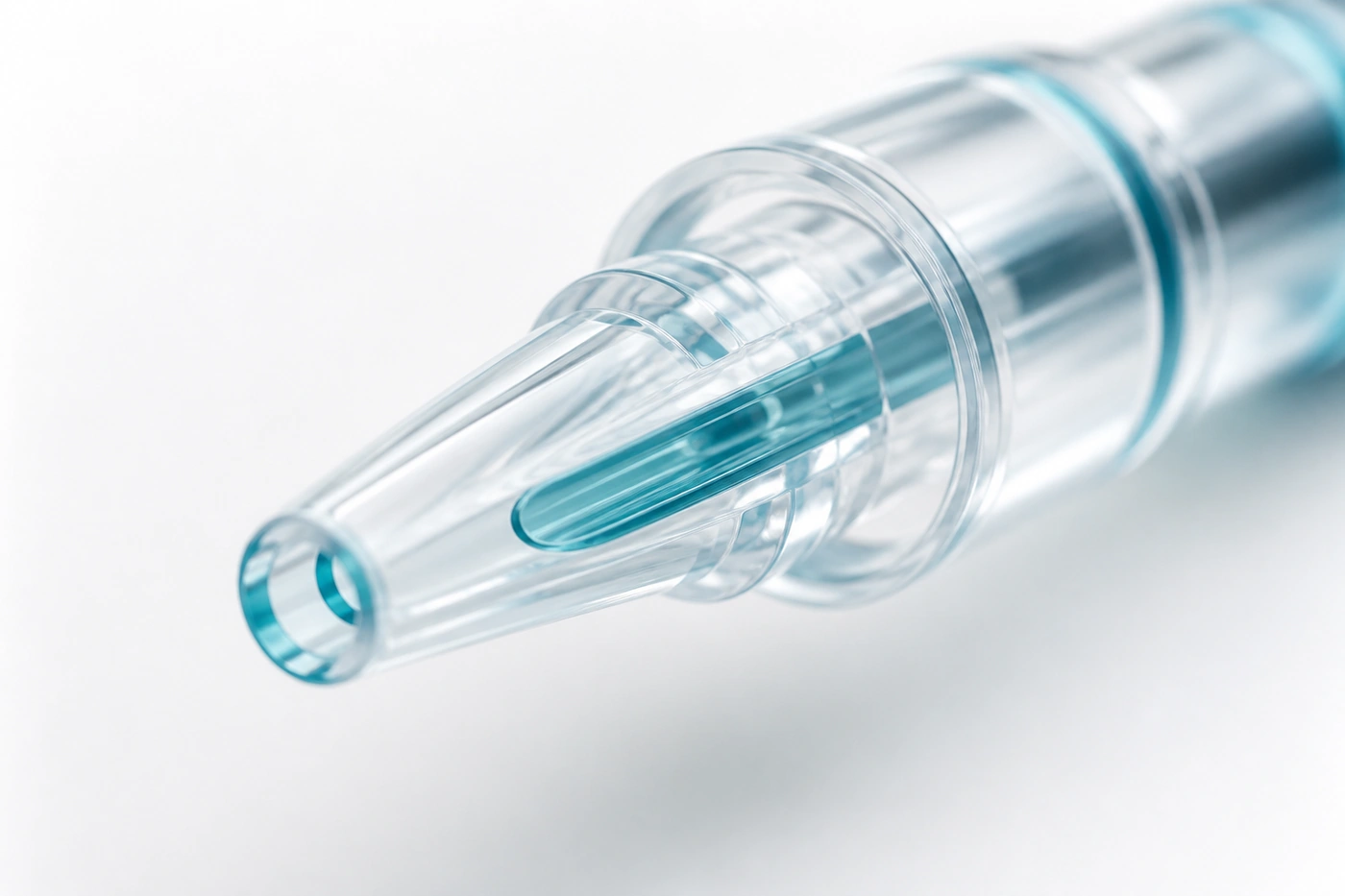
IOL cartridge with hydrophilic coating

MediShield™ coated IOL injection cartridge — enabling smooth lens delivery

Performance specifications

ParameterValue / Detail
Coefficient of friction (wet)< 0.1 (typically < 0.05 on most substrates)
Coating thicknessMicrometer-scale — minimum OD/ID tolerance impact
PFAS contentZero — fully PFAS-free
Biocompatibility standardTested per ISO 10993
Quality systemISO 13485:2016
Sterilization compatibilityEtO compatible; gamma irradiation substrate-dependent
Frequently Asked Questions

What R&D engineers ask about hydrophilic coating

What is the coefficient of friction for MediShield™ Hydrophilic Lubricious Coating?
MediShield™ achieves CoF well below 0.1 in wet environments. On most substrates, CoF below 0.05 is routinely achievable. Exact values for your substrate are characterized during feasibility testing.
Which substrates is the coating compatible with?
Compatible substrates include silicone elastomers, polypropylene, polyurethane, nylon (PA12), Pebax®, PTFE (with surface activation), stainless steel, and nitinol. Compatibility confirmed during feasibility testing.
Can the coating be applied to the inner surface (ID) of tubes?
Yes. Medical Surface has validated proprietary methods for uniformly coating the inner lumen of tubes and over-tubes, including small-diameter catheters — a key advantage of our proprietary coating process over conventional coating methods.
Is MediShield™ Hydrophilic Lubricious Coating PFAS-free?
Yes. MediShield™ Hydrophilic Lubricious is 100% PFAS-free — no fluoropolymer components in the formulation or process, addressing EU REACH restrictions and FDA scrutiny regarding PFAS in medical device components.
What is the process for getting my device coated?
Four stages: (1) Project Review, (2) Feasibility Testing, (3) Coating Optimization, (4) Contract Coating in our ISO 13485 cleanroom with full documentation.
How long does the coating last under clinical use conditions?
MediShield™ Hydrophilic Lubricious Coating is tested under wet abrasion conditions to assess durability. The covalent bond between coating and substrate — unlike physical adhesion in dip-coat or UV-cure processes — gives it superior retention under mechanical stress. Specific durability data for your device geometry and substrate is characterized during feasibility testing.
Is the coating compatible with EtO sterilization?
Yes. MediShield™ Hydrophilic Lubricious Coating is compatible with ethylene oxide (EtO) sterilization. Compatibility with gamma irradiation is substrate-dependent and should be evaluated during the feasibility program for your specific device material.

Enhance your device surface with our coatings.

Contact us to discuss your application and request a feasibility study.